

Floor-mounted Radiography System
Engineered with a fixed dual-column design, this system provides precise diagnostics. Trusted x ray machine suppliers deliver high-efficiency imaging solutions.
View productTwo searches usually start this project: one from a buyer who needs the machine, one from a business that needs the right partner. This guide treats both seriously. It shows what separates a genuine C-arm X-ray machine manufacturer — generator ownership, detector integration, delivered configuration — from a trading desk, and it sets out how a mobile C-arm X-ray supplier should document the Integrated Mobile C-Arm X-Ray Machine (15kW) before you sign anything.
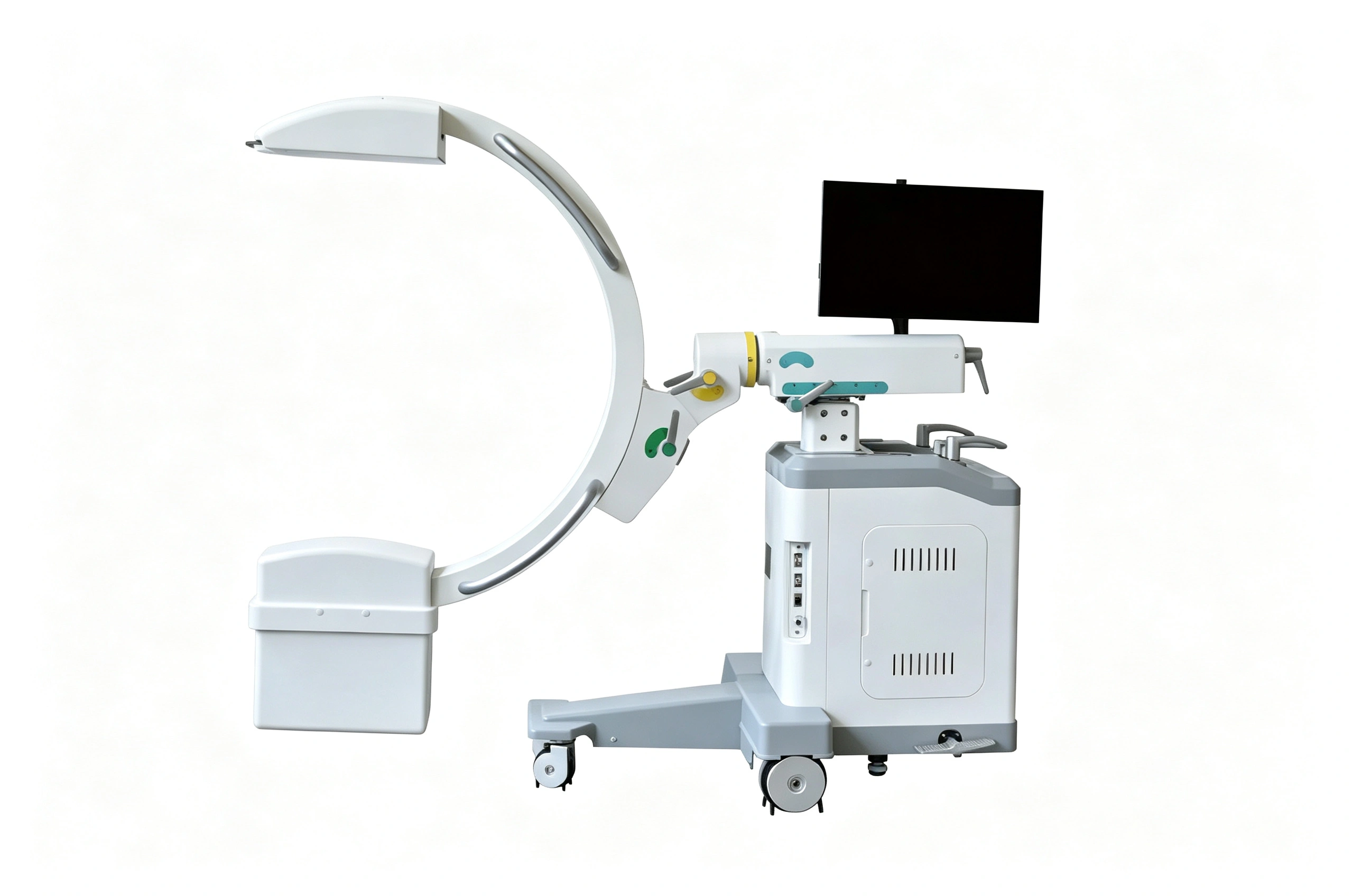
Each row pairs the specification with the clinical reason it matters and the exact wording to demand in your quotation.
| Spec | Why it matters clinically | What to demand in a quote | Rayson configuration |
|---|---|---|---|
| Generator power | Fluoroscopy has to penetrate dense anatomy and metal implants without long exposures that tire the team. | The rated generator power in kW, written on the quotation line itself — not only in the brochure. | 15kW high-frequency generator architecture, stated in the product name and description. |
| Detector type | Continuous intraoperative imaging needs a dynamic detector; a static panel cannot deliver live fluoroscopy. | The detector category in writing, plus the imaging quality claims you are buying on. | Full-digital dynamic flat panel detector (FPD) delivering high-resolution, low-noise digital images. |
| C-arm opening & arc | Opening size decides which patients and which table positions you can actually work in. | Confirm the clearance suits your typical patient mix and your operating table before ordering. | Large opening design providing more surgical space and accommodating patients of different body types. |
| Dose control | Long interventions put staff and patients near the beam for extended periods. | How the system limits exposure during prolonged procedures. | High-frequency high-voltage technology designed to minimize skin absorption dose, with low-dose control combined with flat-panel detection. |
| UPS behaviour | A reboot mid-procedure costs surgical time and disrupts positioning. | Ask exactly what happens on a power interruption and when the unit moves between rooms. | Battery backup (UPS) integrated into the gantry design; it maintains power state and positioning capacity without a full system reboot. |
| Mobility & positioning | In a shared operating room, setup time is the difference between on-time and delayed lists. | How the unit moves, brakes and repositions with a sterile field in place. | Agile, mobile design with automatic hover when moving and one-touch setup. |
| Image quality | Anatomical navigation in complex cases depends on seeing small structures clearly. | Sample images from your own procedure type, not generic marketing renders. | High-resolution, low-noise digital images and sharp fluoroscopic imaging for precise anatomical navigation in complex procedures. |
| Delivered configuration | Missing line items surface as hidden costs after the order is placed. | A written bill of materials attached to the quotation. | Standard packaging: rack, medical combined high-frequency X-ray source component, grid, collimator, dynamic flat panel detector, and related dedicated computer accessories. |

Position, opening size and detector placement are the three points buyers should physically inspect on a demonstration unit before signing.
Send these eight rows to every supplier and require a written answer per row. Vendors who answer all eight in the same document are usually the ones whose machines match their paperwork. Vendors who answer four and defer four are asking you to accept risk you have not priced.
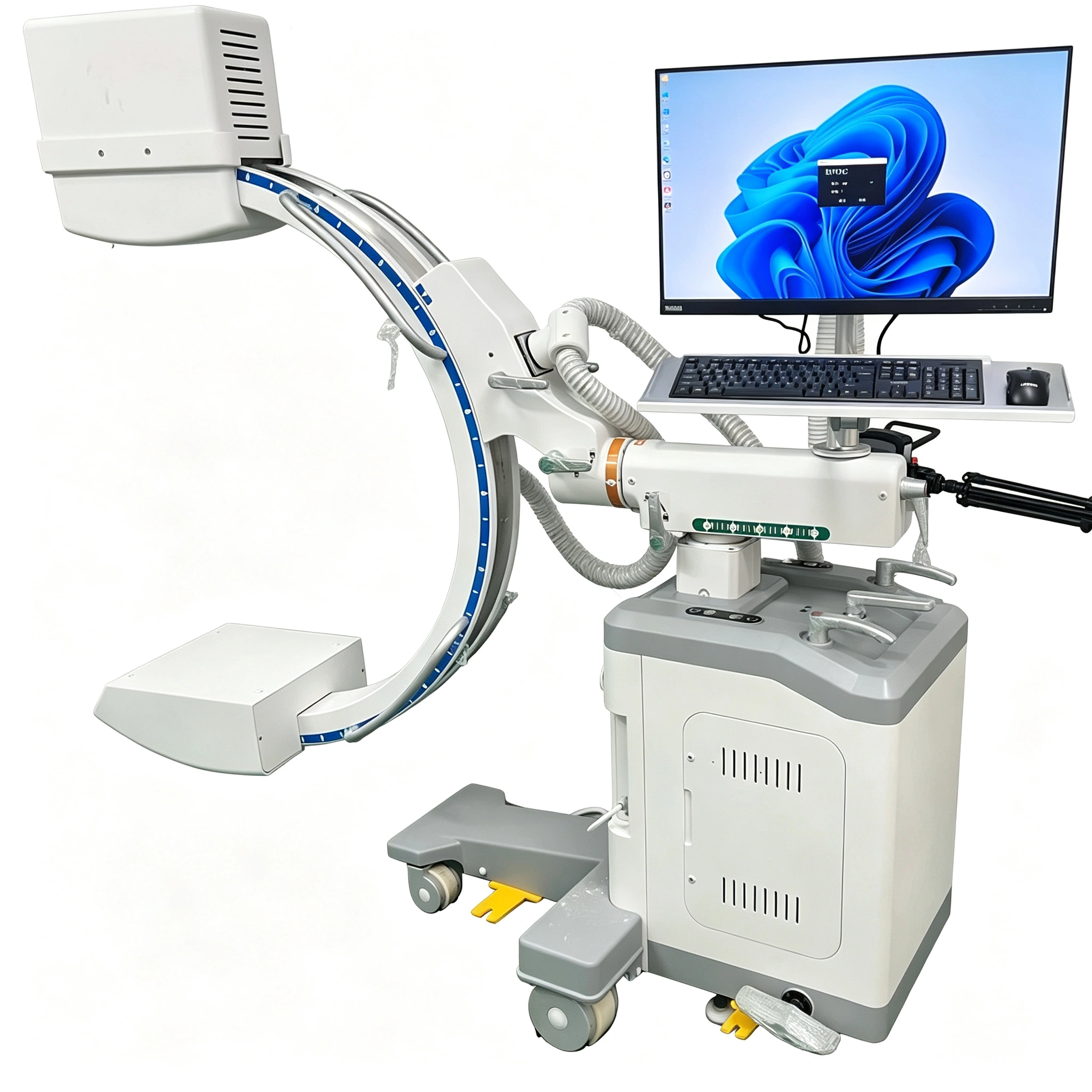
The machine is positioned for real-time imaging in orthopedics, trauma, spine, joints and pain management. Here is what each of those settings should push you to verify.
Internal fixation, fracture reduction and bone setting depend on fast, repeatable views from awkward angles.
Buyer decision: verify the large opening design fits your patient mix and table before ordering.Percutaneous vertebroplasty, pedicle screw placement and spinal fusion tracking need continuous fluoroscopic monitoring.
Buyer decision: insist on the full-digital dynamic FPD — static panels cannot support this workflow.Targeted nerve block injections, joint cavity punctures and radiofrequency ablation run long and repeat often.
Buyer decision: weigh low-dose control first — it protects staff across a full list.Rapid trauma assessment and emergency foreign body localization leave no time for a slow setup.
Buyer decision: confirm one-touch setup and automatic hover on the demonstration unit.Routine surgery requiring continuous fluoroscopic monitoring across a shared room and a mixed schedule.
Buyer decision: the integrated UPS matters here — moving between rooms should not force a reboot.Minimally invasive arthroscopic-assisted joint evaluations and treatments reward clean, low-noise imaging.
Buyer decision: ask for high-resolution, low-noise sample images from this procedure type.Compare offers line by line, not page by page. This is the standard delivered configuration for the Integrated Mobile C-Arm X-Ray Machine (15kW) — if a competitor's offer is missing one of these lines, the price difference is not a discount.

Print this page and take it into the meeting. Every item should produce a document, a name or a date.
Ask for one integrated gantry design covering source, collimator, grid, detector and UPS — and for a photo of the assembly, not a render.
Name the holder of spare parts after warranty and confirm whether replacements trace back to the original build.
Confirm what installation and clinical training are included, and in which language they are delivered.
Ask for warranty terms and the service response path in writing, including who performs service once the warranty period ends.
Request the technical datasheet and manual in the language your biomedical team and regulators require.
Confirm in advance whether customization or bulk orders are supported, and whether distribution partnerships and global hospital projects are handled directly.
Send your procedure mix, room type and country, and ask for a written offer covering the full standard package. Include these details so the quotation answers the questions you actually have.
Related Products
Keep adjacent product options together for a faster catalog comparison.
Engineered with a fixed dual-column design, this system provides precise diagnostics. Trusted x ray machine suppliers deliver high-efficiency imaging solutions.
View product
Fully customizable OEM solutions for 32kW ceiling-mounted digital X-ray systems. Reliable units from leading x-ray equipment manufacturers for clinical imaging.
View product
With a compact, ergonomic design, this unit offers high-definition imaging for clinical use. Trusted by leading x ray machine suppliers and x ray equipment manufacturers, it ensures precise…
View productreview the product details, images, and specifications presented on the official product page.
use the application and use-case information published on the official product page.
confirm the specifications and options listed for the exact product variant before placing an order.
check the official product page or ask the supplier about options shown for the selected product.
use the official contact or inquiry path provided on the site.
include the product page, intended use, required quantity, and any specifications you need the supplier to review.
