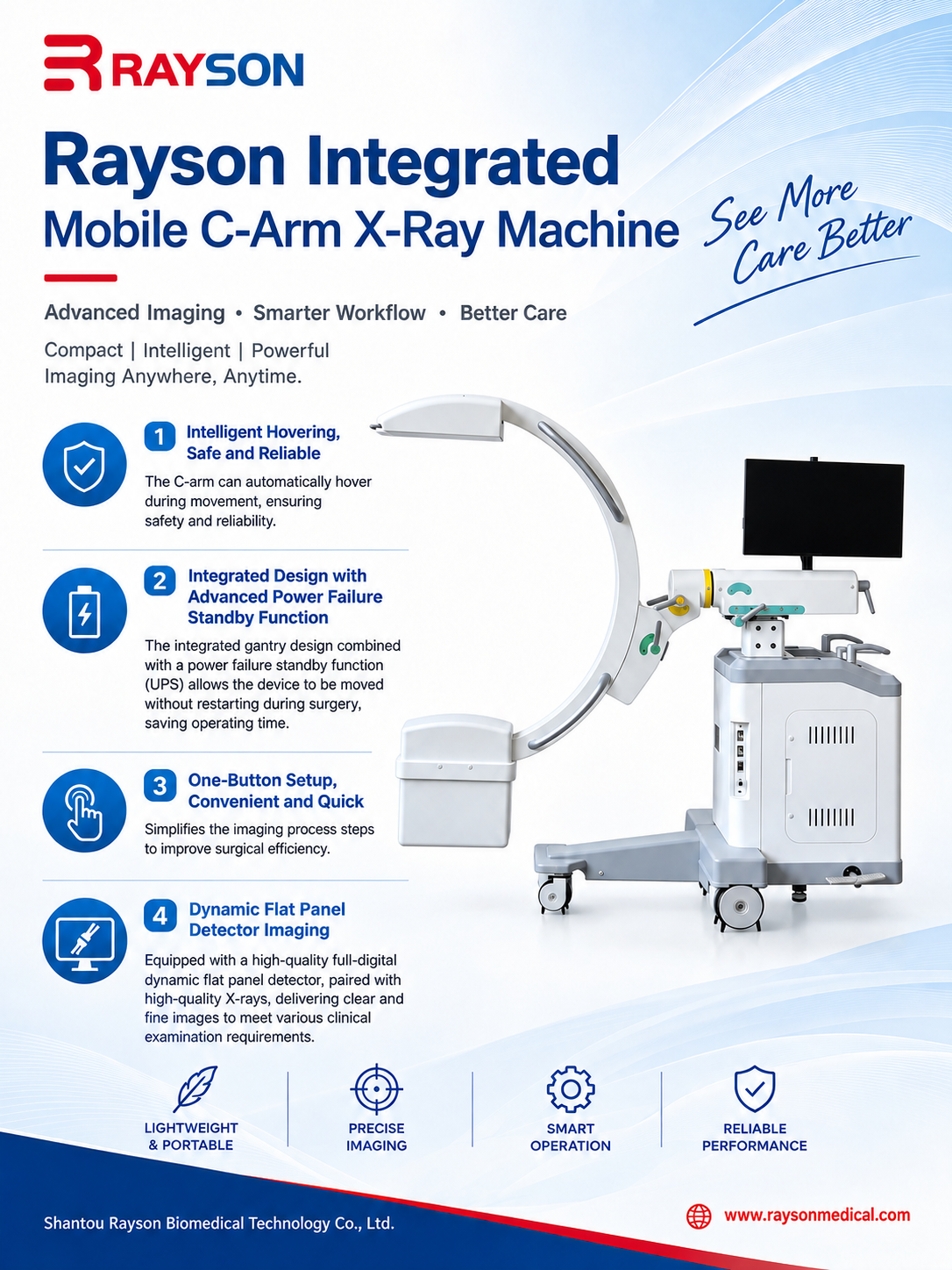
As aging intensifies, the number of patients visiting orthopedic departments in many hospitals has been continuously rising. To meet patient needs, hospitals have been constantly improving their medical technologies and equipment configurations. The mobile C-arm, a commonly used imaging device in orthopedics, has always been favored and is hailed as the "third eye" of orthopedic surgeons.
1 What is a C-arm X-ray Machine
The C-arm X-ray machine features a C-shaped frame and consists of an X-ray tube that generates X-rays, an image intensifier that captures images, a CCD camera, and an image processing workstation. In clinical settings, it is often referred to by various names such as small C, C-arm X-ray machine, C-arm, C-type arm, or mobile C-arm. Its primary uses include orthopedic surgery for nailing, bone setting, and reduction; surgical implantation of pacemakers, removal of foreign bodies from the body, certain types of angiography, and some interventional procedures. It also assists in pain treatment with ozone therapy, needle knife therapy, and gynecological fallopian tube guidance surgeries.
2 Advantages of Mobile C-Arm X-Ray Machines
Compared to other imaging equipment, its advantages are as follows:
Compact and Portable: Unlike traditional fixed X-ray machines, mobile C-arm X-ray machines are movable, making it more convenient for doctors to operate in both wards and operating rooms.
Easy to Operate: Mobile C-arm X-ray machines enable more timely and convenient use during surgery, providing fluoroscopic services for surgical procedures.
Clear Imaging: The high-quality imaging of mobile C-arm X-ray machines results in clearer images.
3 Clinical Significance
These three strong advantages have made C-arm X-ray machines widely used in surgeries. Doctors can perform surgery by observing the display on the device, hence the C-arm X-ray machine is also known as the "second pair of eyes" for orthopedic surgeons.