WELCOME TO OUR BLOG

We're sharing knowledge in the areas which fascinate us the most
click

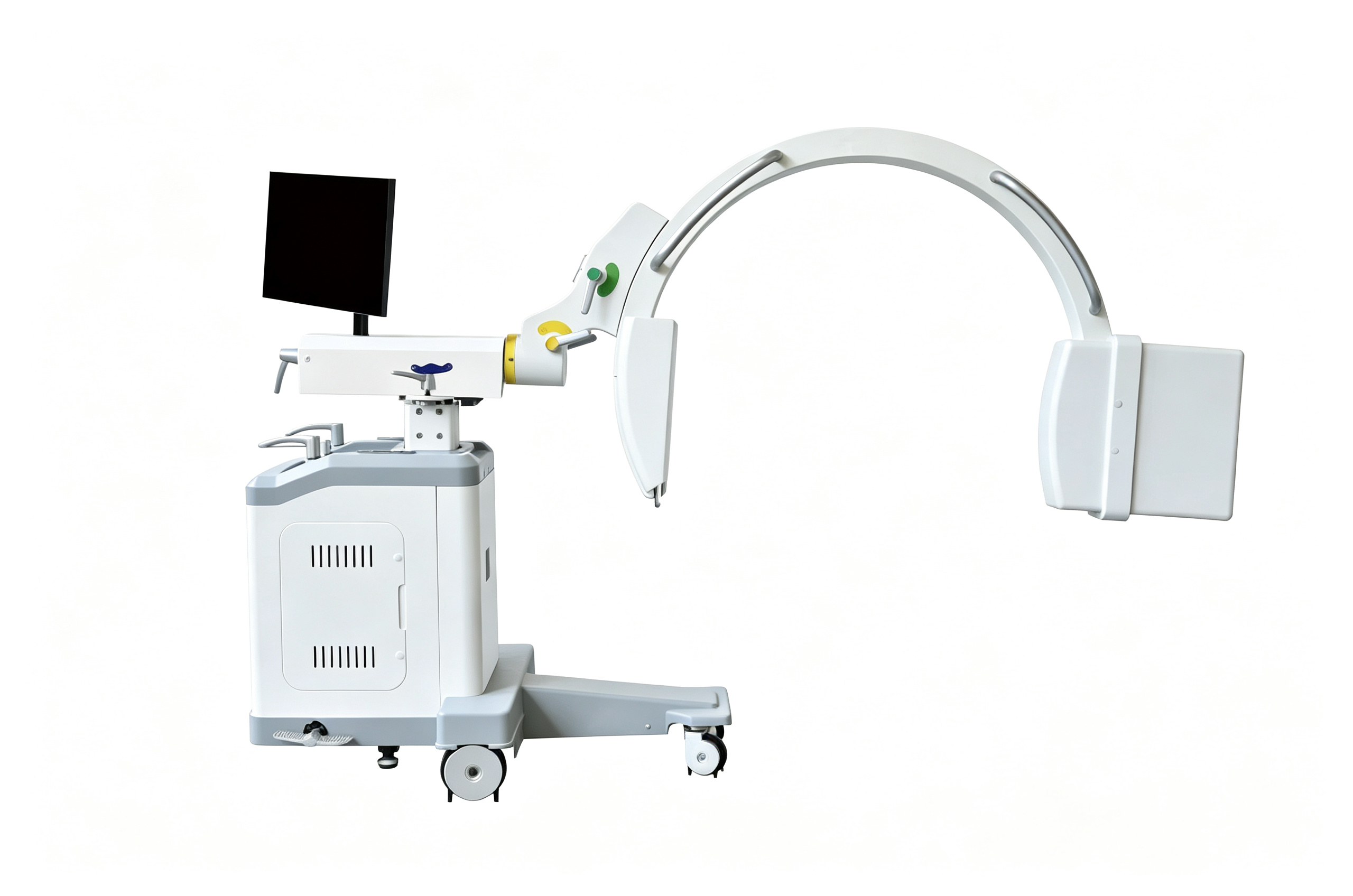
The 'C-arm machine' is the 'fluoroscopic eye' of the operating room, but is it harmful if used excessively?

By Rayson Biomedical September 2nd, 2026 12 views

1. What exactly is it? An X-ray machine that 'takes videos'.

You can imagine it as a smart, movable 'big C':

1
One end is a 'super bulb' (X-ray emitter): it emits extremely thin X-ray beams, like a highly penetrating 'gaze' that easily passes through your muscles and soft tissues.
2
The other end is a 'high-definition camera' (image receptor): it captures the X-ray signals that have passed through the body and weakened.
3
As this C-shaped robotic arm slowly moves around the area of your body, it isn't taking a static photo—it's recording a real-time '透视 video' of the inside of your body. Doctors can dynamically observe the shape of bones, the path of blood vessels, and the precise position of surgical instruments within the body through the screen.

2. Why is it indispensable? Without it, many surgeries would 'revert to the era of blind operations'

In the era without C-arm machines, some complex surgeries were like groping in the dark. Doctors had to make larger incisions and rely on experience and tactile sensation to locate targets. The advent of the C-arm machine was akin to installing a real-time 'GPS navigation system' for surgeons.

In orthopedics: It allows a small screw to be precisely implanted along the bone's 'tunnel', perfectly avoiding important nerves and blood vessels. Without it, screw placement might be like 'walking a maze blindfolded'.
In interventional radiology: Doctors need to guide a catheter as thin as a hair from a leg vein all the way to a lesion in the heart or brain. The C-arm machine acts as a lighthouse illuminating this winding 'highway', ensuring the catheter reaches its destination accurately.
In general surgery: For deep-seated tumors or foreign bodies within the body, the C-arm machine functions like a 'live scanner', helping surgeons pinpoint locations precisely, enabling minimally invasive surgeries with small incisions and high accuracy.

Radiation Safety: Contextualized & Quantified

Firstly, Yes, C-arm machines do produce ionizing radiation (X-rays) during operation. There is no need to shy away from this fact; it is also the source of all concerns.

However, please remember a key principle: Any discussion of toxicity without considering dose is unscientific. The key to measuring radiation's impact on the human body is the amount of 'dose' received.

Typical Procedure Dose

1–5 mSv
(complex surgeries may be higher, simple ones lower)

Safety Threshold

<100 mSv/year
(internationally recognized upper limit)

vs. Natural Background

≈ 6–12 months of natural environmental radiation

vs. Air Travel

≈ 30–100 round trips
Beijing–Shanghai

vs. CT Scan

Lower dose than pelvic/abdominal CT

Clinical Balance

Surgical benefit far outweighs risk
at this dose level

The C-arm, this 'X-ray eye' of the operating room, is undoubtedly a precious gift bestowed upon us by modern medicine. It functions like a precise 'navigational scalpel,' offering substantial and certain health benefits. The radiation risks it entails have been reduced to a negligible and entirely acceptable level through standardized operation and multiple layers of protection. The next time you encounter this 'C-shaped companion' in the operating room, may understanding bring you calm, replacing fear of the unknown.
Previous
Choosing the Right Handheld-Digital X-Ray System for Mobile Diagnostic Needs
Read More
Next
Imaging Where the Patient Is: A Conversation with Ethan Lin, Product Manager at Rayson Biomedical
Read More
Leave a message
Name
Email*
Message
Verification Code*