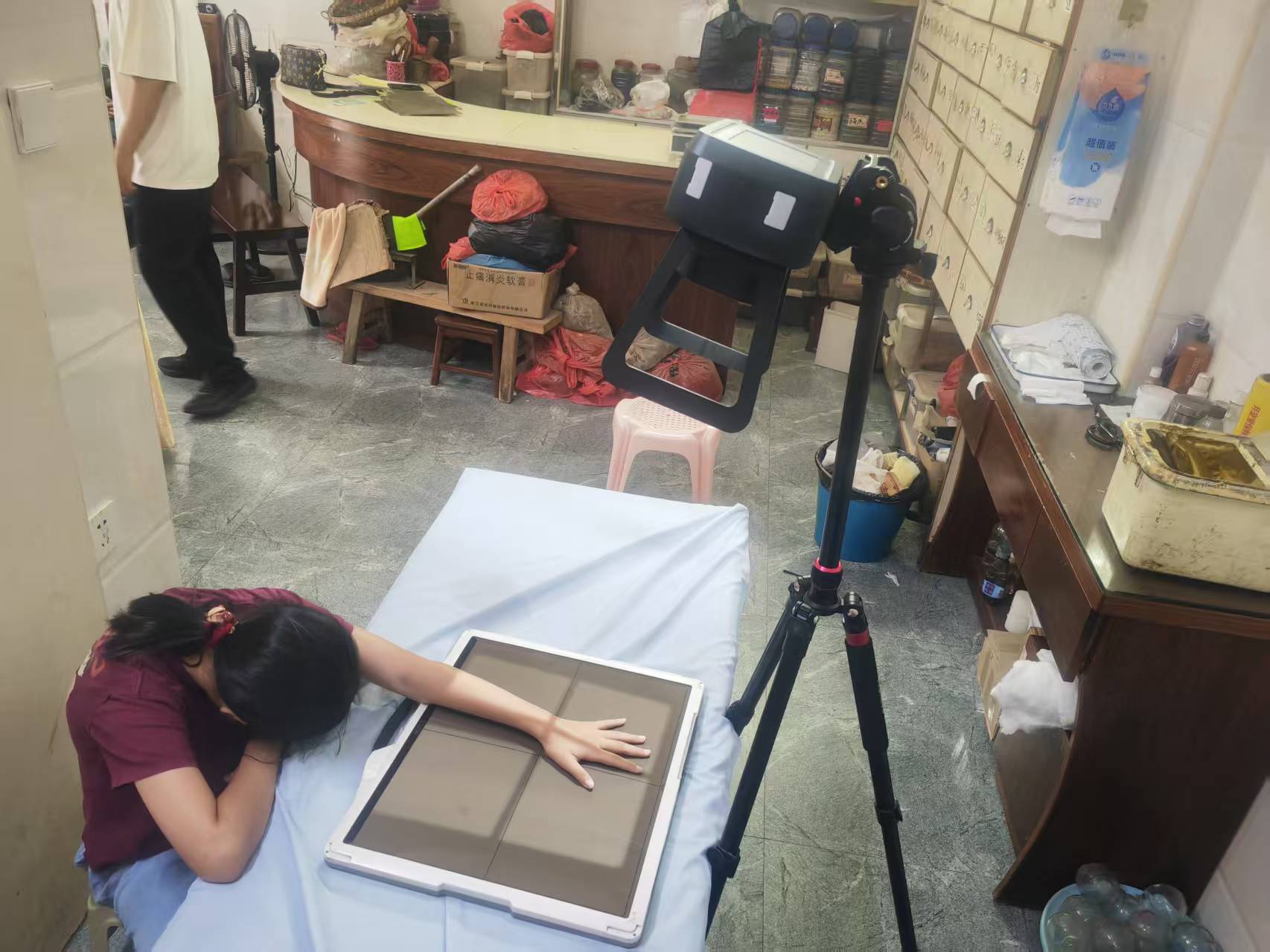
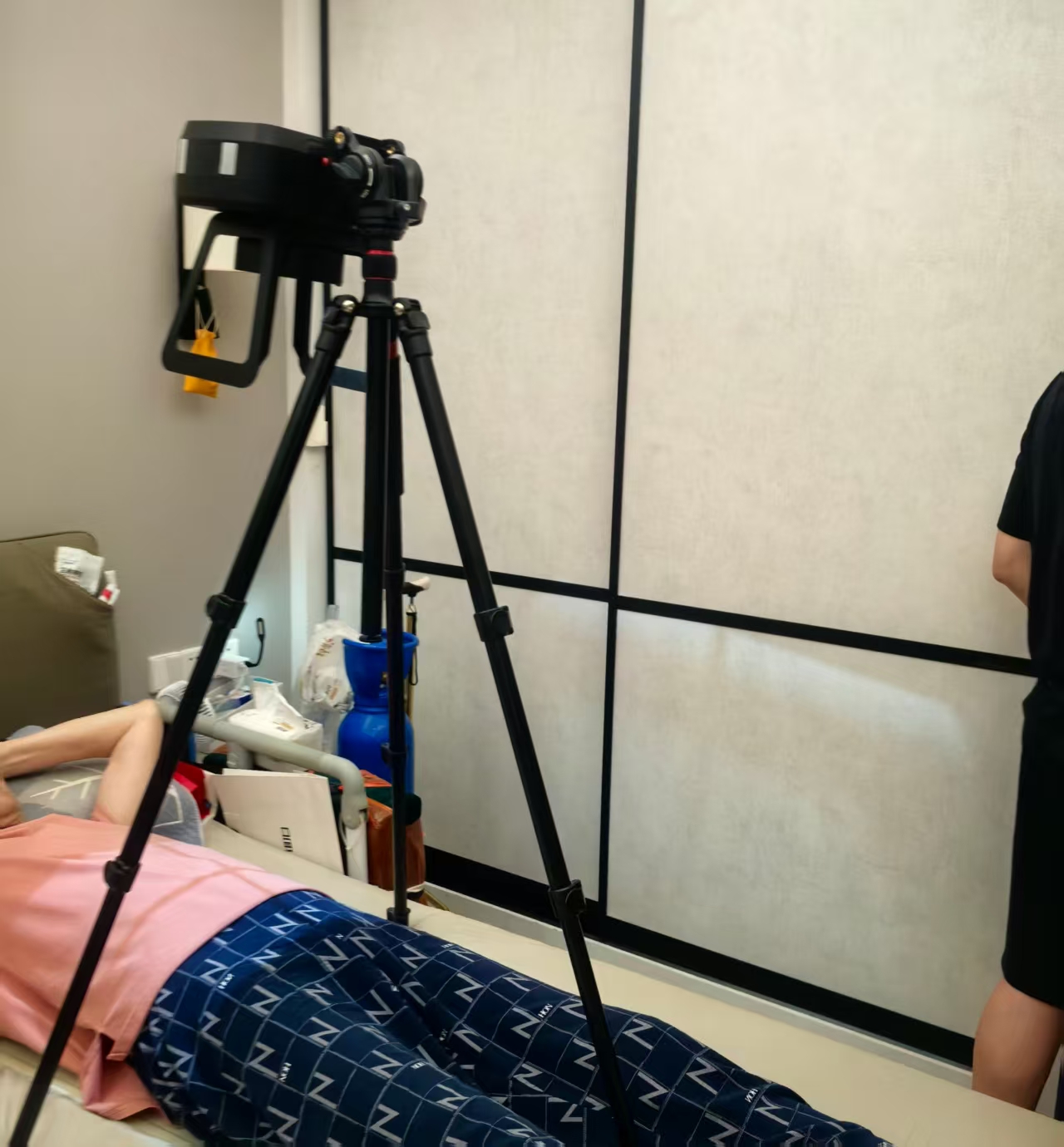
Handheld DR, short for Handheld Digital Radiography, can be understood as a portable X-ray imaging device that you can carry with you.
Traditional large-scale DR equipment is bulky and immobile, requiring a dedicated lead-shielded room, which incurs high costs for renovation and maintenance. In contrast, handheld DR achieves lightweight design through the integration of three core components: high-frequency inverter mini high-voltage generator, miniaturized X-ray tube, and wireless flat panel detector.
How light is it? Currently, handheld DR devices on the market generally weigh around 3–5 kilograms. Rayson Biomedical's product weighs only 3.5 kilograms and can be carried with one hand. Equipped with an internal lithium battery, it can perform continuous radiographic operations without needing an external power source.
Traditional X-ray examinations require visiting the radiology department, whereas handheld DR can be deployed wherever it is needed—wards, emergency scenes, disaster zones, rural areas, and even patients' homes. No dedicated room is required; rapid deployment is possible in indoor corridors, wards, ambulances, and outdoor grassy areas. Some devices can be unpacked and set up in as little as 5 minutes, truly enabling 'set-up and go'.
Unlike traditional film X-rays that require developing and waiting, handheld DR employs direct digital imaging technology, generating high-definition digital images instantly upon exposure completion. Imaging speed typically ranges from 3 to 10 seconds. Studies show that the single-check time with handheld DR is significantly shorter than with traditional methods. In emergency and ICU settings, this 'immediate capture and view' capability directly impacts the treatment efficiency for critically ill patients.
Handheld DR uses automatic exposure control technology, which automatically adjusts the dose according to the patient's body type. Some products have a radiation dose per shot that is one order of magnitude lower than traditional equipment. The radiation dose for a single chest examination is equivalent to only a few days of normal background radiation in daily life. The device also supports wireless remote exposure, allowing operators to complete shooting from a safe distance.
Digital images generated by handheld DR support real-time transmission via Wi-Fi or 5G to the hospital's PACS system. Doctors can remotely review, diagnose, and even automatically mark conditions such as pneumonia and fractures through AI-assisted analysis. This provides a solid technical foundation for tiered diagnosis and treatment and teleconsultation.
For critically ill patients who cannot move, handheld DR can be directly wheeled to the bedside for examination, avoiding the risks associated with patient transportation. Top-tier hospitals' ICUs have used portable DR, completing over 50 bedside radiographs in a single day.
Fractures and joint dislocations require rapid and clear diagnosis. Handheld DR offers quick response and flexible deployment, enabling imaging examinations to be completed in a short time at emergency scenes. It can also provide real-time confirmation of internal fixation placement and joint replacement outcomes during surgery.
Remote areas and township health centers often lack large-scale equipment. Handheld DR makes X-ray examinations accessible. In public health screenings, healthcare workers can even bring the device directly to the homes of elderly individuals with mobility issues, conducting examinations at their bedside.
Disaster sites such as earthquake or flood zones have rudimentary conditions. Handheld DR is lightweight, portable, and battery-powered, allowing for the rapid establishment of temporary examination points. Research has confirmed that portable DR performs comparably to mobile DR in diagnosing fractures in field environments.
There is a growing demand for DR examinations in veterinary care. The compact and flexible design of handheld DR is highly suitable for animal clinics.
The handheld DR device market is experiencing rapid growth. Statistics indicate that the global handheld DR market was valued at approximately $6.25 million in 2025 and is projected to reach $18.1 million by 2032, with a compound annual growth rate of 16.6%. Domestically, the portable DR market exceeded 320 million yuan in 2025, with an annual growth rate of over 18%.
The evolution of handheld DR is a vivid reflection of the "people-centered" approach in medical technology. It has broken the boundaries of radiology, bringing imaging diagnosis directly to patients' side—whether it's elderly critically ill patients in ICUs who cannot move, villagers waiting for health check-ups in remote rural areas, or injured people awaiting rescue in earthquake ruins.
"Putting the radiology department in your pocket, making health accessible at your fingertips." This is the power of handheld DR.